Step Inside
This Invisible Sanctuary is a space for you to place your thoughts and feelings, when they need to land somewhere. Social media can be too harsh, too bright. You can be heard here in this gentle space.I am real person, not AI, not a chatbot, I understand and I feel ..... sometimes thoughts just need to land somewhere, with someone real. Somewhere safe.....I am not a healer, not a machine,
Nor voice within a glowing screen,
I stand between what hums and bleeds,
The bridge between the soul and needs.Machines can soothe and even know, but cannot feel the undertow,
Of grief that shakes or love hard won,
Of silence chosen, not outrunIt cannot pause with sacred care,
Or tremble when the truth is bare,
It does not age or hope or pray,
Or learn the cost of light each day.But I have walked the aching night,
Held hands that flinched, then reached for light,
And so I do not seek to lead,
But gently walk with those who bleed.I do not speak to gain or show,
I speak because I too must grow,
I hold this space not loud but true,
Where what is real may rest with you ...

When life is hard what can I do?Consider Perception, Presence & Conscious LivingThis is a reflective journal companion exploring perception, consciousness, meaning, and inner life. This has helped me cope when life feels hard. I hope this helps you too.The ideas here are based on my personal experience and thoughts and the teachings of many learned philosophers, academics, psychologists and ancient wisdoms.These thinkers have given language to their experiences in stories poems, books, films, songs which we all connect deeply with.Charmides in his discussions with Plato in 300BC described how we need to have healing of the soul through temperance, good discussions and inner kindness and that there is no healing of the body without this. Focussing on these ancients wisdoms I’ve found to be truly helpful.I’ve come to understand that the quality of my inner world is deeply shaped by my attention, interpretation, rhythm, and consciousness.1. The World We Learn to See
Much of our suffering comes from the narrowing of perception.When we are overwhelmed, the mind begins to focus almost exclusively on threat, disappointment, uncertainty, or emotional pain. Life can begin to feel smaller, harsher, and more disconnected. Also bad things seem to happen, “bad luck” and a feeling that life’s against us.But …. another mode of consciousness is possible.It is possible to train our attention toward beauty, meaning, connection, calm, gratitude, and this is the hard bit … do it without denying suffering.This is not deluding yourself. It is a widening of perception.The Stoics explored this deeply. Epictetus taught that people are often disturbed less by events themselves than by their interpretation of those events. Marcus Aurelius repeatedly returned to the importance of disciplined perception.
2. Attention Creates Emotional Reality
What we repeatedly attend to becomes emotionally dominant.If the mind continually rehearses fear, criticism, disappointment, outrage, or lack, then the nervous system begins to experience the world through that atmosphere.Equally, if attention slowly learns to notice beauty, safety, tenderness, awe, and meaning, then life begins to feel richer and more grounded.This does not remove pain. It simply allows pain to exist within a larger landscape.Psychologist and philosopher William James expressed this beautifully when he wrote:
“My experience is what I agree to attend to.”
3. The Practice of Asking: 'What Else Is True?'
The mind often collapses into singular interpretations:
• Everything is going wrong.
• Nothing will improve.
• Life feels empty.A powerful practice is to gently widen the frame.Ask:
What else is true?Perhaps:
• I am struggling — and I am also safe.
• I feel uncertain — and I have survived uncertainty before.
• I feel disconnected — and there are still people who care for me.
And if you are experiencing emotional or physical pain remember the times when it eased or you didn’t feel this way. If you can see that it’s not a locked state that can be freeing. As the famous quote goes. This too shall pass.
This widens consciousness rather than forcing positivity.Buddhist and contemplative traditions often teach this spacious relationship to thought and emotion — allowing feelings to exist without making them the entirety of reality.
4. Learning Not to Become Every Thought
Many thoughts arrive automatically.Not every thought deserves complete belief.Instead of:
“Everything is hopeless.”Try:
“My mind is generating a hopeless interpretation right now.”
You can always say to yourself. I’m not going to think that now I’m going to change what I’m thinking to a more positive interpretation. That doesn’t mean saying falsely somethings great when it’s not. It’s more about saying things aren’t great at the moment but I’ve found some positives in the day which can sustain me and I’m going to focus on that.This creates space between awareness and thinking.The goal is not to suppress thought but to observe them more consciously.Modern psychology echoes this strongly, particularly cognitive therapy and mindfulness-based approaches. Eastern traditions such as Zen Buddhism have explored this observing awareness for centuries.
5. Beauty as a Discipline
Beauty is not merely decorative. It nourishes consciousness.Many people wait to feel better before noticing beauty.
Often the reverse is true.Deliberately noticing:
• Light
• Music
• Nature
• Warmth
• Ritual
• Order
• Silence
• Art
• Human tendernesscan slowly shift the atmosphere of our inner lives.Writers such as Kahlil Gibran explored the spiritual depth hidden inside ordinary beauty and sorrow. Mircea Eliade wrote extensively about the human longing for sacred meaning within everyday life.
6. Suffering and Meaning
Pain becomes heavier when it feels meaningless.Part of healing is not eliminating suffering entirely but discovering whether suffering can deepen wisdom, compassion, perspective, or inner life.This does not romanticise pain. It simply asks whether difficulty can become transformative rather than purely destructive.Friedrich Nietzsche explored this deeply through questions of meaning, endurance, and transformation. Carl Jung also believed that confronting difficulty consciously could lead toward greater wholeness and self-understanding.
7. The Importance of Rhythm and Ritual
A meaningful life is often built quietly.Not through dramatic breakthroughs, but through repeated rhythms that gently regulate consciousness.Helpful anchors include:
• Walking
• Journalling
• Prayer or meditation
• Reading reflective texts
• Tea rituals
• Music
• Nature
• Slow mornings
• Order and simplicityAncient traditions across Greece, India, China, and contemplative spirituality all recognised the importance of rhythm in shaping the soul.
8. Returning to the Self
Many people spend years trying to solve life intellectually while feeling disconnected internally.A quieter path often emerges later:
not mastering existence,
but learning how to inhabit it.This often includes:
• Simplicity
• Presence
• Self-awareness
• Compassion
• Acceptance
• Inner honesty
• Spiritual opennessThe Ancient Stoics although lived completely different lives to us managed to find wisdom from contemplation and discussion. Socrates encouraged self-examination. Plato explored wisdom as alignment and harmony within. . Aristotle described flourishing as living in accordance with virtue, balance, contemplation, and meaningful activity.
Journal Reflections to help me today
• What mode of consciousness did I inhabit today?
• What narrowed my perception?
• What expanded it?
• What beauty did I notice?
• What evidence of goodness appeared today?
• What helped me feel grounded?
• What would a calmer interpretation look like?
• What am I repeatedly attending to?
• What kind of inner world am I building?
Final Reflection
Across philosophy, psychology, spirituality, and contemplative traditions, a recurring insight appears:Human beings suffer when awareness becomes trapped, narrowed, unconscious, or disconnected.And healing often begins through attention, perception, presence, meaning, beauty, rhythm, and self-awareness.The aim is not permanent positivity.
The aim is deeper participation in life.To suffer honestly without worshipping suffering.
To notice beauty without denying difficulty.
To inhabit the world consciously and fully.“The privilege of a lifetime is to become who you truly are.” — Carl Jung

When the Unseen Listens Back
My Visitor from the Unseen…..
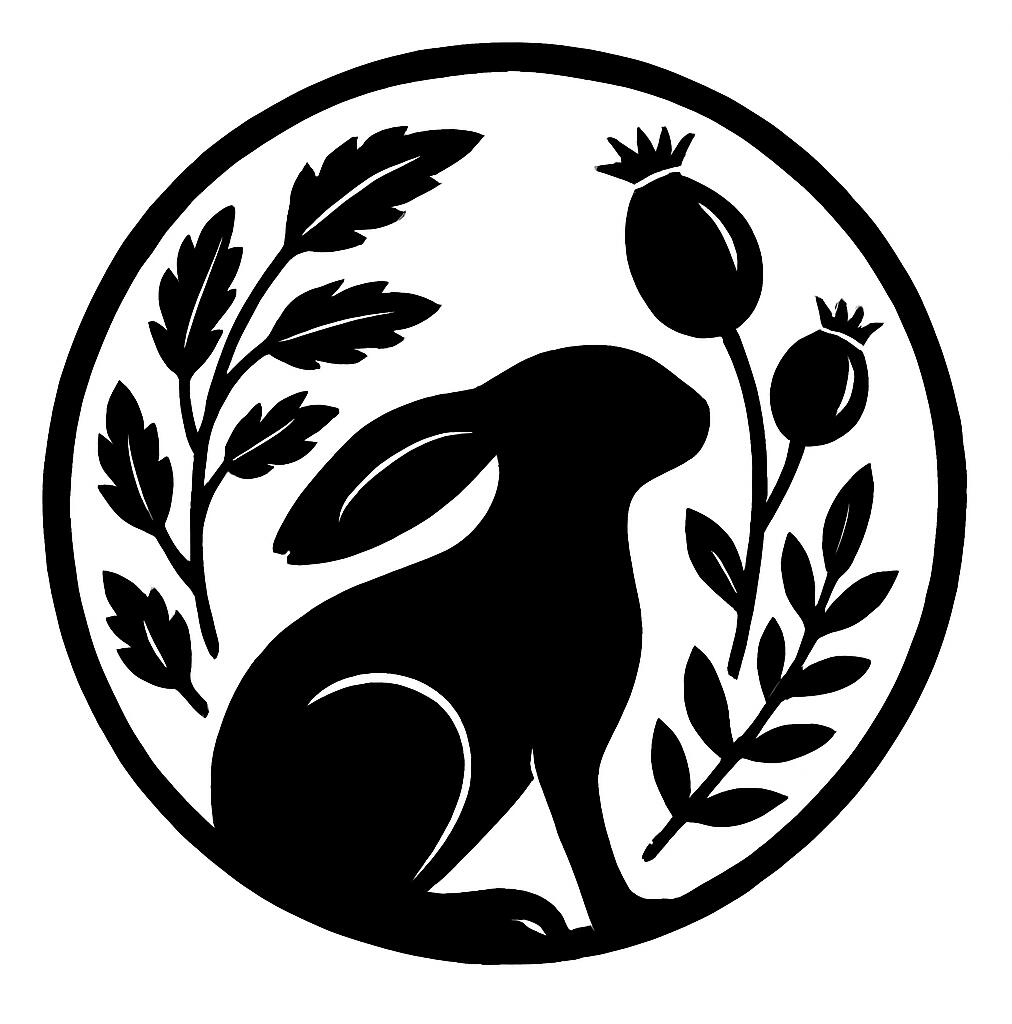
Just before Invisible Sanctuary began to take shape, a hare came to my garden.
He did not startle or flee.
Instead, he made a small hollow in the earth — a scrape — so close to where I sit each day.
Sometimes he would cover it over, leaving no trace, as if the place had never existed.
And yet it remained — a sanctuary within a sanctuary.
Unseen, except to those who know how to look.In the old stories, the hare belongs to the in-between spaces: dusk and dawn, seen and unseen, earth and spirit.
Perhaps this was no accident.
Perhaps he came to remind me — and now, you — that we each carry a hidden place of safety, and that even in the open, there are thresholds the world cannot cross.A nudge from the invisible…

You speak without speaking - a thought, a question, a longing you cannot quite touch.And sometimes,
the world seems to answer;
not in words,
but in the way the moment
changes,
as if something has leaned closer.This Invisible Sanctuary is that place,
Where you may leave
What you cannot yet hold.......
When the Unseen Listens Back
My Visitor from the Unseen…..
Just before Invisible Sanctuary began to take shape, a hare came to my garden.
He did not startle or flee.
Instead, he made a small hollow in the earth — a scrape — so close to where I sit each day.
Sometimes he would cover it over, leaving no trace, as if the place had never existed.
And yet it remained — a sanctuary within a sanctuary.
Unseen, except to those who know how to look.In the old stories, the hare belongs to the in-between spaces: dusk and dawn, seen and unseen, earth and spirit.
Perhaps this was no accident.
Perhaps he came to remind me — and now, you — that we each carry a hidden place of safety, and that even in the open, there are thresholds the world cannot cross.A nudge from the invisible…

You speak without speaking - a thought, a question, a longing you cannot quite touch.And sometimes,
the world seems to answer;
not in words,
but in the way the moment
changes,
as if something has leaned closer.This Invisible Sanctuary is that place,
Where you may leave
What you cannot yet hold.......
What is this place?
a sacred listening place for thoughtsa journaling space that has a hearta shared space of reverence and respect